Queue Management System in Saudi Arabia: 7 Ways It Fixes Customer Flow
Choosing the right queue management system in Saudi Arabia is no longer a luxury reserved for big banks. In 2026, clinics, telecom stores, government service centers, and retail chains all compete on how quickly and calmly they serve people. The lobby is now part of your brand, and a smart queuing platform is how you keep that first impression positive.
This article breaks down seven concrete ways intelligent queuing fixes customer flow, plus how appointment scheduling, digital signage, and analytics work together. If wait times are hurting your reputation, these are the levers that move the needle fastest.
Why Customer Flow Is a Strategic Priority in 2026
The Kingdom’s service economy is growing under Vision 2030, and customer expectations have climbed with it. People compare their bank branch to their favorite app. If a visit feels slow or disorganized, they notice immediately.
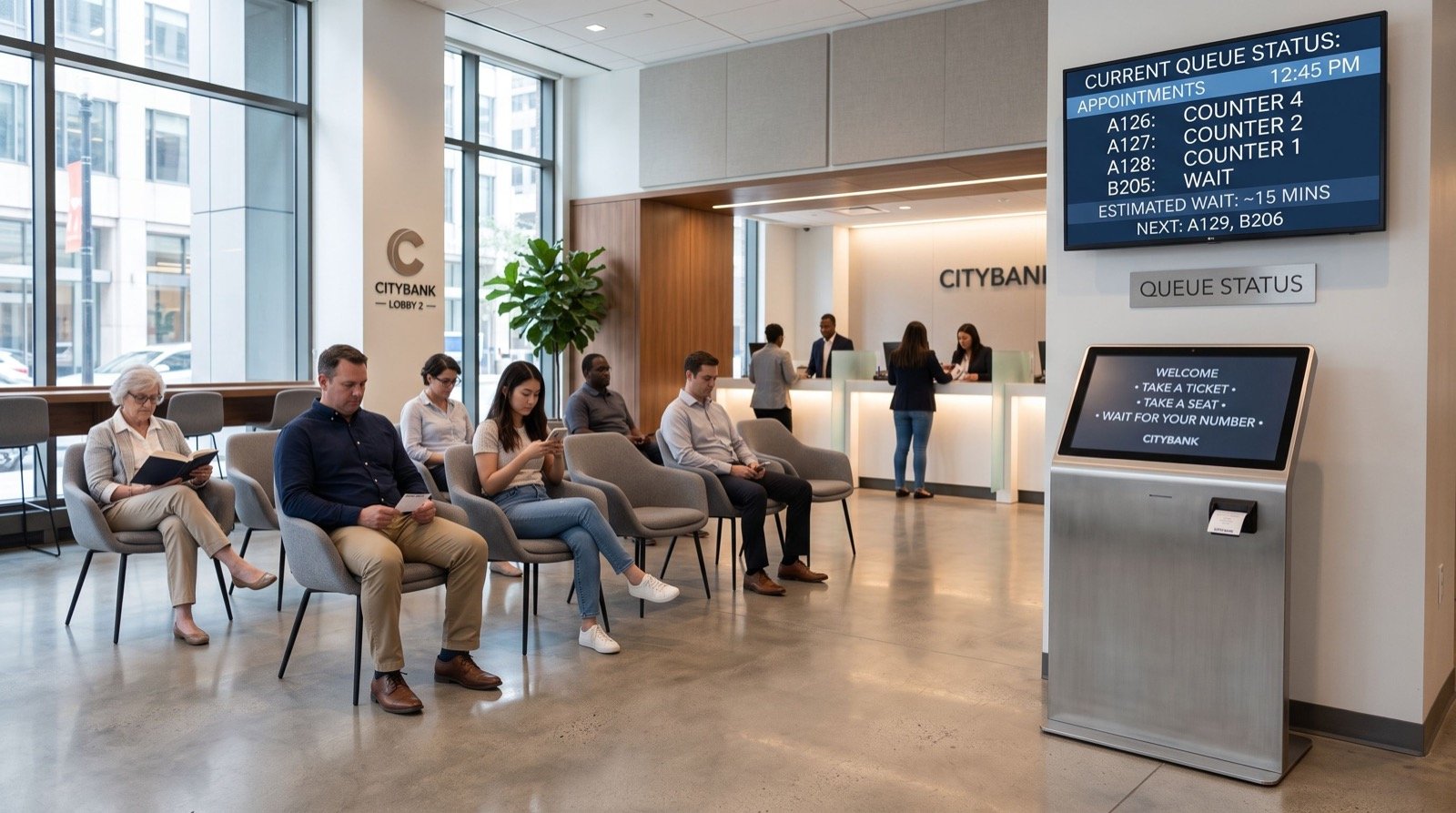
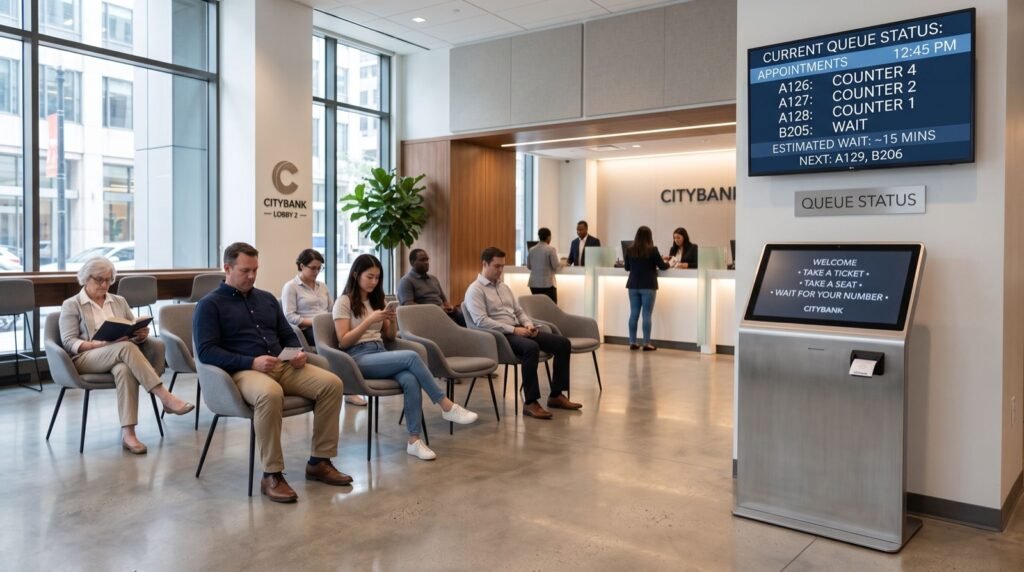
A queuing platform gives structure to that visit. It replaces the anxious huddle near a counter with a clear ticket, a visible position in line, and an accurate estimate of the wait. That single change lowers stress before an agent even says hello.
The Difference Between a Line and a Flow
A line is passive; people just stand and hope. A managed flow is active; the system routes each person to the right service point, balances load across agents, and captures data on every step. That is the shift from chaos to control.
7 Ways a Queue Management System Fixes Customer Flow
Below are the seven improvements Saudi operators consistently report after switching to a modern platform.
- Shorter perceived waits: visible position and estimates make time feel faster.
- Fair service order: transparent first-come logic ends arguments at the counter.
- Smart routing: complex cases go to specialists, quick tasks to fast lanes.
- Appointment integration: booked visitors blend smoothly with walk-ins.
- Real-time staffing: managers open counters the moment demand spikes.
- Actionable data: dashboards reveal peak hours and slow processes.
- Better feedback: exit surveys tie satisfaction to specific branches and agents.
Each of these compounds. Together they turn a frustrating lobby into a measured, improvable operation.
How Appointment Scheduling Supercharges Queuing
Walk-in management is only half the story. Appointment scheduling lets customers reserve a slot before they arrive, which smooths demand across the day and reduces crowding at peak times.
When a booked customer checks in, the system recognizes them and slots them into the flow without forcing them to the back of the line. This hybrid model, blending appointments with walk-ins, is now the standard in Saudi healthcare and banking.
A Practical Tip From the Field
One overlooked win: send an automated reminder the day before an appointment. It cuts no-shows dramatically, and every no-show avoided is a slot that serves a paying customer instead of sitting empty. This small automation often delivers the fastest visible return.
Digital Signage and the Psychology of Waiting
Screens do more than call numbers. Good signage informs, reassures, and even sells. According to guidance from the Nielsen Norman Group, clear feedback about progress keeps people patient because uncertainty, not time itself, is what frustrates them most.
Use your displays to show current ticket numbers, estimated waits, and helpful content in Arabic and English. A customer watching a useful screen feels the wait far less than one staring at a wall.
| Feature | Customer Benefit | Manager Benefit |
|---|---|---|
| Digital tickets | No standing in line | Accurate arrival data |
| Mobile queuing | Wait anywhere | Less lobby crowding |
| Signage & audio | Clear, bilingual calls | Fewer missed turns |
| Analytics dashboard | Faster service | Data-driven staffing |
| Feedback surveys | A voice in the process | Branch-level insight |
Choosing a Provider That Understands the Region
Technology is only as good as the team behind it. A queuing platform must fit Saudi realities: bilingual interfaces, local compliance, reliable uptime, and support engineers who can reach your branches quickly.
When you shortlist vendors, favor those with regional deployment history. A trusted queue management system in saudi arabia should come with references from banks, hospitals, or public offices that already run it at scale. Cross-border experience helps too; providers who also deliver a proven queue management system in lahore bring lessons learned from high-volume environments across the region.
Ask about training, warranty, and response times. Working with reliable local experts means your system stays healthy long after installation day, which is where most of the long-term value actually lives.
Questions to Ask Before You Sign
- How quickly can you respond to an on-site fault?
- Is the software cloud-based, on-premise, or hybrid?
- Can it integrate with our existing CRM and booking tools?
- What reporting comes standard, and can we customize it?
- How is data secured and stored in line with local regulations?
Measuring Success After Go-Live
Define success before you install. Capture baseline numbers for average wait, service time, abandonment, and satisfaction. Then compare after 60 to 90 days. Clear metrics turn a subjective “it feels better” into a board-ready result.
Most operators watch three numbers closely: reduction in average wait, drop in walk-aways, and rise in survey scores. When all three move in the right direction, the investment justifies itself.
Frequently Asked Questions
How does a queue management system in Saudi Arabia reduce wait times?
It replaces physical lines with digital tickets, routes each customer to the best available counter, and balances staff against real-time demand. Managers use the data to fix bottlenecks, which steadily shortens both actual and perceived waits.
Can small clinics and single branches benefit too?
Absolutely. Cloud-based platforms scale down as easily as they scale up. Even a single clinic gains from digital tickets, appointment reminders, and simple analytics that reveal its busiest hours.
What is the difference between virtual and physical queuing?
Physical queuing uses on-site kiosks and tickets, while virtual queuing lets customers join from a phone and wait anywhere. Most modern deployments combine both so visitors can choose what suits them.
How soon will we see results?
Many businesses notice calmer lobbies within the first week. Measurable gains in wait time and abandonment usually appear within the first two to three months, once staffing is tuned to the data.
Conclusion: Turn Waiting Into a Competitive Edge
In 2026, the businesses that win are the ones that respect the customer’s time. A well-implemented queue management system in Saudi Arabia shortens waits, organizes flow, and hands your managers the data to keep improving. Blend appointments, mobile queuing, and clear signage, and you create a service experience people actually remember for the right reasons.
Want to see it in action at your branch? Reach out to an experienced provider, book a demo, and start turning your waiting area into a genuine competitive advantage.