
Fanvil IP Phones in Rawalpindi: The 2026 Buyer’s Guide for Smarter Offices
Choosing the right desk phone is no longer a small decision. If you run an office, clinic, hotel, or call centre in the twin cities, the hardware on every desk shapes how your team sounds to customers. That is why so many buyers now compare Fanvil IP Phones in Rawalpindi before they commit to a new communication system. In 2026, the shift from old copper lines to SIP-based calling is nearly complete, and Fanvil has become one of the most trusted names for reliable, affordable VoIP endpoints across Pakistan.
This guide walks you through what matters: how IP phones work, which Fanvil models fit which room, and how to buy with confidence. By the end, you will know exactly how to match a handset to your budget and your call volume.
Why Fanvil IP Phones in Rawalpindi Make Sense in 2026
Rawalpindi businesses are modernising fast. Fibre internet is widely available, cloud PBX platforms are cheap, and remote work is normal. A SIP desk phone plugs into that world without the cost of legacy exchanges.
Fanvil hardware stands out for three reasons. First, the build quality is strong for the price. Second, the handsets support HD audio that makes every call clearer. Third, provisioning is simple, so an experienced local team can roll out dozens of units in a single afternoon.
- Lower call costs — route calls over the internet instead of per-minute landlines.
- Easy scaling — add a new extension by plugging in a phone, not rewiring a wall.
- Remote friendly — a home-based agent uses the same extension as the head office.
- Unified features — call transfer, conferencing, voicemail-to-email, and busy-lamp fields come standard.
How Do IP Phones Actually Work?
An IP phone turns your voice into data packets and sends them over your network using the Session Initiation Protocol, or SIP. The handset registers to a PBX or cloud provider, which then connects your call to any other number in the world. Because the standard is open, Fanvil devices work with Asterisk, FreePBX, 3CX, Grandstream UCM, and most hosted platforms.
The SIP standard is published and maintained as an open specification by the Internet Engineering Task Force, which is why interoperability between brands is so dependable today. For a deeper primer on the underlying technology, the overview of Voice over IP explains how packetised audio replaced circuit-switched calling.
What You Need Before You Deploy
- A stable internet connection, ideally fibre, with at least 100 Kbps per concurrent call.
- A SIP account from a hosted provider or an on-premise PBX.
- A PoE switch or power adapters for each handset.
- Extension numbers and a dial plan prepared in advance.
Choosing the Right Fanvil Model for Your Desk
Fanvil offers a ladder of phones from simple entry units to premium colour-screen flagships. Your choice should follow the role of the person using it. A receptionist who juggles many lines needs programmable keys. An executive wants a large display and a comfortable handset.
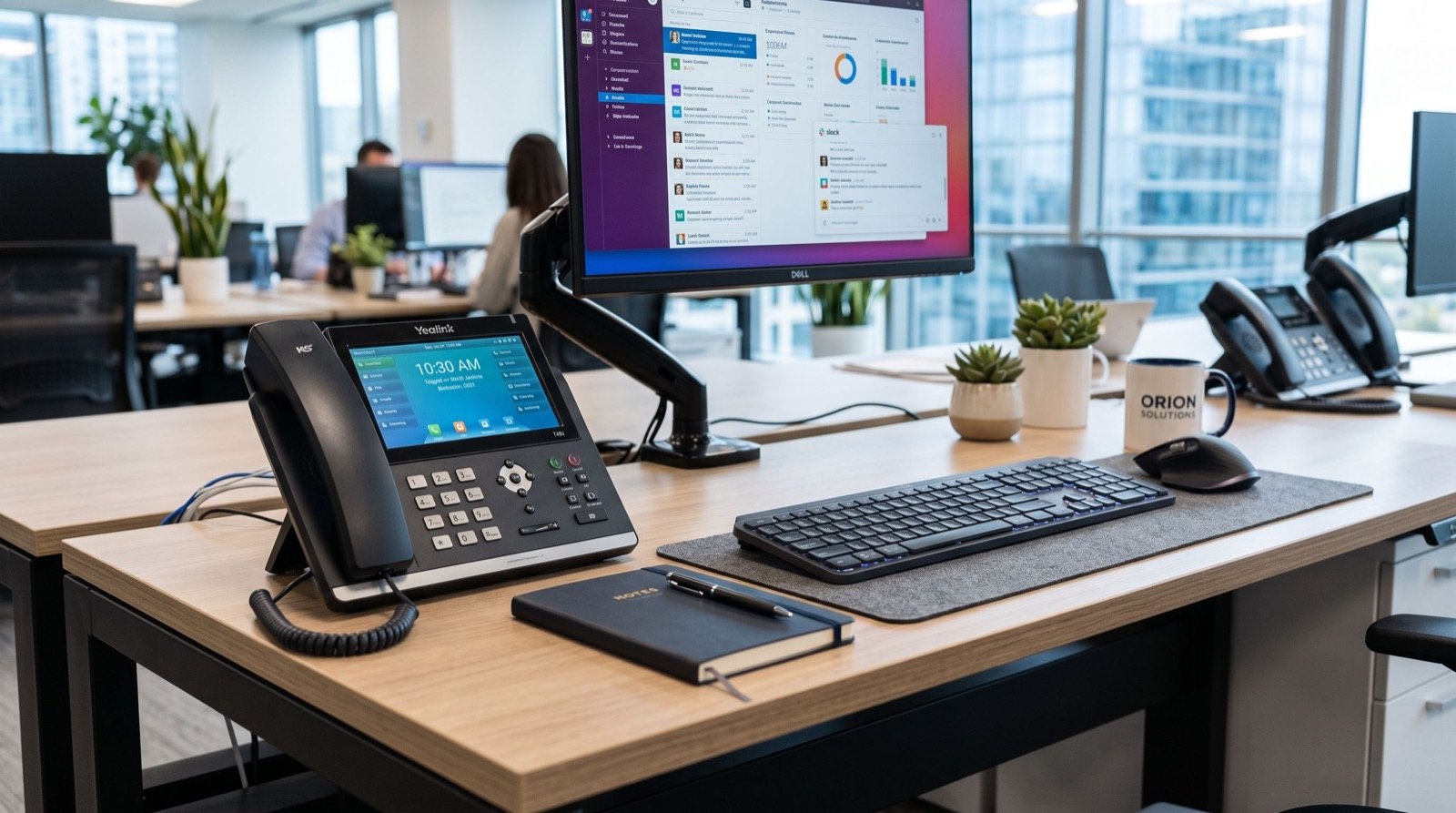
For managers, directors, and busy front desks, the Fanvil V61G Prime Business Phone is a standout. It pairs a crisp colour screen with gigabit ethernet, Wi-Fi and Bluetooth options, and a generous set of line keys, making it ideal for anyone who lives on the phone all day.
Model Comparison at a Glance
| Model tier | Best for | Screen | Line keys | Typical room |
|---|---|---|---|---|
| Entry | Shared desks, warehouses | Monochrome | 2 | Floor staff |
| Mid-range | General office use | Colour | 4 | Agents, admin |
| Prime (V61G) | Managers, reception | Colour HD | Expandable | Front desk, executives |
| Flagship | Boardrooms, video calls | Large touch | Many | Meeting rooms |
Deployment Tips From Real Installations
After helping local offices switch over, a few lessons repeat themselves. Plan the dial plan on paper first. Label each handset with its extension before it leaves the bench. Use PoE wherever possible so a single cable carries both power and data, which keeps desks tidy and reduces failure points.
One practical tip that saves hours: enable auto-provisioning on your PBX. Instead of typing SIP credentials into every phone by hand, the device pulls its own configuration file on boot. For a twenty-seat office, that turns a full day of setup into roughly an hour.
- Reserve a small VLAN for voice traffic to protect call quality.
- Set up voicemail-to-email so missed calls never get lost.
- Keep firmware current to patch security and add features.
- Buy one spare handset per ten seats for instant swaps.
What to Budget in 2026
Prices have stayed competitive this year despite rising import costs. An entry handset remains affordable enough for every warehouse desk, while a prime model like the V61G costs more but pays for itself through productivity. When you compare total cost of ownership against aging PRI lines, the VoIP route usually wins within the first year.
Remember that the phone is only part of the picture. Factor in a quality PoE switch, a reliable internet link, and a support plan. A trusted supplier and an experienced installation partner matter as much as the hardware itself.
Keeping Your VoIP System Secure
Security deserves attention the moment you connect phones to the internet. The good news is that a few simple habits protect you from almost every common threat, and Fanvil handsets support the controls you need.
Start by changing default passwords on every device and on the PBX itself. Restrict SIP registration to known networks where possible, and disable any services you do not use. Regular firmware updates close known vulnerabilities, so schedule them rather than leaving them to chance.
- Use strong, unique SIP credentials for each extension.
- Enable TLS and SRTP to encrypt signalling and audio where your PBX supports it.
- Place voice traffic behind a firewall and a dedicated VLAN.
- Monitor call logs for unusual international activity.
These steps take minutes to apply during setup yet save a Rawalpindi business from costly toll fraud and downtime. A careful installer bakes them in from day one, which is another reason to lean on a knowledgeable local partner.
Frequently Asked Questions
Are Fanvil IP phones compatible with my existing PBX?
Yes. Fanvil phones use standard SIP, so they register to Asterisk, FreePBX, 3CX, Issabel, and nearly every hosted cloud platform. You simply enter the SIP server address, extension, and password, or use auto-provisioning.
Do I need special internet for VoIP in Rawalpindi?
You need a stable connection, not necessarily a fast one. Each call uses roughly 85 to 100 Kbps. Fibre is ideal, but a solid business broadband link with low jitter handles a busy office comfortably.
Can I use one phone for both office and home?
Absolutely. Because the extension lives on the server, you can take a Fanvil handset home, plug it into any internet connection, and keep the same number and features you use at the office.
How long do Fanvil IP phones last?
With regular firmware updates and normal use, a well-built business handset typically serves five to seven years. The open SIP standard means it stays compatible with platforms for a long time.
Final Thoughts
Upgrading your office communication is one of the highest-return moves a growing business can make in 2026. Clear calls, lower bills, and easy scaling all come from choosing the right hardware and a dependable partner. If you are ready to compare models and get expert advice, explore the full range of Fanvil IP Phones in Rawalpindi and let a knowledgeable team help you match each desk to the perfect handset.